Blog
How to Use TAIJIDONGFANG Decorations to Balance Energy

Your home is more than just a place to sleep and eat. It is a living space filled with energy that affects how you feel, think, and even how your day unfolds. This is the core idea behind Feng Shui – the ancient Chinese art of arranging your environment to create harmony.
At TAIJIDONGFANG, we believe that true balance begins with understanding the flow of Qi (pronounced “chee”), the life force that moves through everything. Our decorations are thoughtfully designed to help you bring this ancient wisdom into your modern life – not as superstition, but as a practical way to create a home that supports your wellbeing.
This guide will walk you through everything you need to know about using TAIJIDONGFANG decorations to balance the energy in your home, office, or any space you want to transform.
The Philosophy Behind TAIJIDONGFANG
The name TAIJIDONGFANG combines two powerful concepts. Taiji (太极) is the supreme ultimate – the cosmic source from which Yin and Yang emerge. In Chinese philosophy, Taiji represents the state of perfect balance before any division. From Taiji comes Yin and Yang – the two opposite but complementary forces that make up all of existence.
Dongfang (东方) means “the East” – the direction of sunrise, new beginnings, growth, and the Wood element. Together, TAIJIDONGFANG represents the fusion of ancient Taoist wisdom with a fresh, modern approach to creating balanced spaces.
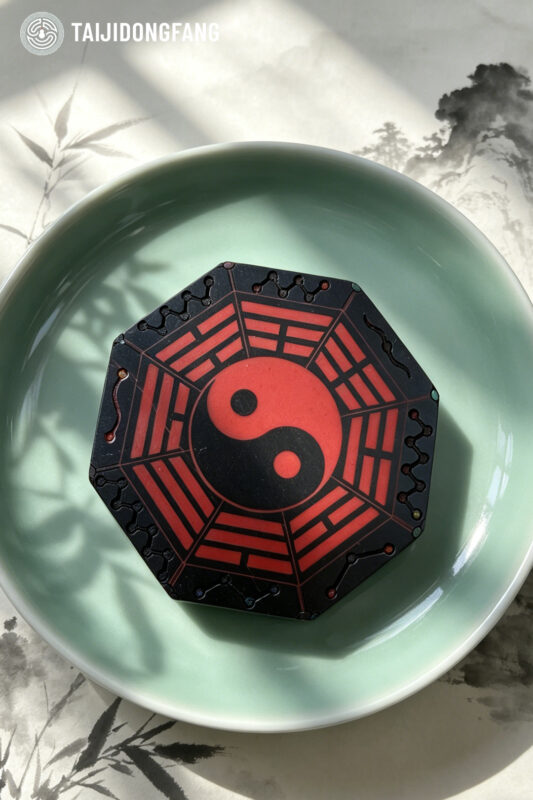
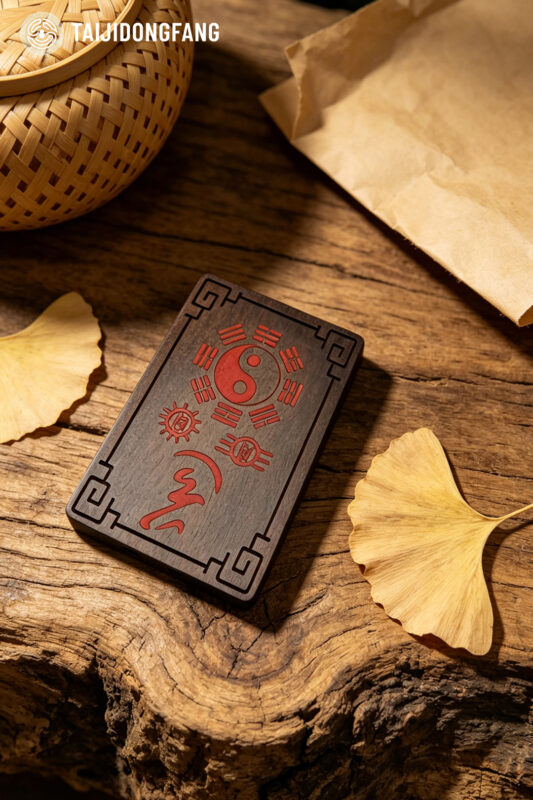
The Yin-Yang symbol (Taijitu) that inspires many of our pieces is not just a pretty design. It carries deep meaning: light within darkness, darkness within light, constant motion, and perfect harmony. When you bring a TAIJIDONGFANG piece into your home, you are inviting this philosophy of balance into your daily life.
Understanding Qi: The Energy You Cannot See But Can Feel
Before you start placing decorations, take a moment to understand the energy you are working with. Qi is the invisible life force that flows through everything – your body, your furniture, the air in your rooms.
When Qi flows smoothly, you feel refreshed, focused, and at ease. When Qi becomes stagnant, blocked, or too chaotic, you may feel tired, anxious, or stuck. Have you ever walked into a room and immediately felt heavy or uncomfortable without knowing why? That is your body sensing imbalanced Qi.
Feng Shui decorations work as tools to guide, attract, or protect Qi. They are not magic – they are practical instruments that help you consciously shape the energy environment around you.
Essential TAIJIDONGFANG Decorations and How to Use Them
TAIJIDONGFANG offers a variety of pieces inspired by classical Feng Shui symbols. Below is a complete guide to each type, its purpose, and exactly where to place it.
1. Taiji (Yin-Yang) Symbol Decorations
The Taiji symbol is the foundation of our philosophy. It represents the dynamic balance of all opposing forces – day and night, active and restful, masculine and feminine, giving and receiving.
What it does: Brings overall harmony to any space. When Yin and Yang are balanced, life feels smoother, conflicts soften, and you experience a sense of grounded calm.
Where to place it:
Living room – On a central wall or above the sofa to create a harmonious gathering space
Home office – Behind your desk or on a side wall to balance work intensity with calm focus
Hallway – At the end of a long corridor to prevent energy from rushing straight through
Meditation or yoga space – As a focal point to remind you of balance
What to avoid: Do not place it in the bathroom or kitchen, as these areas have strong, imbalanced energy that may overwhelm the subtle balancing effect of the symbol.
Material matters: A brass or bronze Taiji piece brings grounding Metal energy. A jade or wood piece brings gentle, growing Wood energy. Choose based on the feeling you want.
2. Five Elements Collection (Wu Xing)
Chinese philosophy teaches that everything is made of five elements – Wood, Fire, Earth, Metal, and Water. Each element carries specific qualities, and your home needs all of them in balance. TAIJIDONGFANG offers pieces representing each element.
| Element | Qualities | TAIJIDONGFANG piece example | Best room |
|---|---|---|---|
| Wood | Growth, flexibility, creativity | Green jade carving, wooden sculpture | Home office, living room, children’s room |
| Fire | Passion, energy, recognition | Red crystal, candle holder, phoenix symbol | Dining room, fame area of the home |
| Earth | Stability, nourishment, trust | Yellow or brown ceramic piece | Center of the home, bedroom |
| Metal | Clarity, precision, protection | Brass or silver ornament, Five Emperor Coins | Study, wealth area, front entrance |
| Water | Wisdom, flow, abundance | Black or dark blue piece, flowing shape | Career area (north), bathroom (to calm excess) |
How to use the Five Elements collection:
First, observe your space. Is one color or material dominating? Too much metal can feel cold and rigid. Too much wood can feel chaotic and overgrown.
Add the element that is missing. For example, if your home office feels too chaotic (too much Fire or Wood), add a Metal piece to bring clarity and structure.
Place the element in its corresponding Bagua area (more on this below).
3. Pi Xiu (貔貅) – The Wealth Guardian
The Pi Xiu is one of the most beloved mythical creatures in Chinese Feng Shui. With the head of a dragon and the body of a lion, this creature is said to have a powerful appetite for wealth – and most importantly, it never lets what it gathers escape.
What it does: Attracts and guards wealth, protects your assets, and brings financial stability.
Where to place it:
Home office or business entrance – Facing the main door or a large window to capture incoming wealth
Wealth corner – The far left corner of your home when standing at the front door (southeast area)
Cash register or safe area – For retail shops or businesses
Crucial rules:
Never face Pi Xiu toward your own bed – This creates restless energy that disrupts sleep.
Never face it toward a bathroom or kitchen – These areas drain its wealth-attracting energy.
Pi Xiu should always face outward – Toward the door or window to pull wealth in from the outside world.
Keep it clean – Dust weakens its effectiveness. Wipe it gently once a week.
Size guide: A Pi Xiu should not be too large in a bedroom. For living rooms or offices, a medium-sized piece (palm-size or slightly larger) works best.
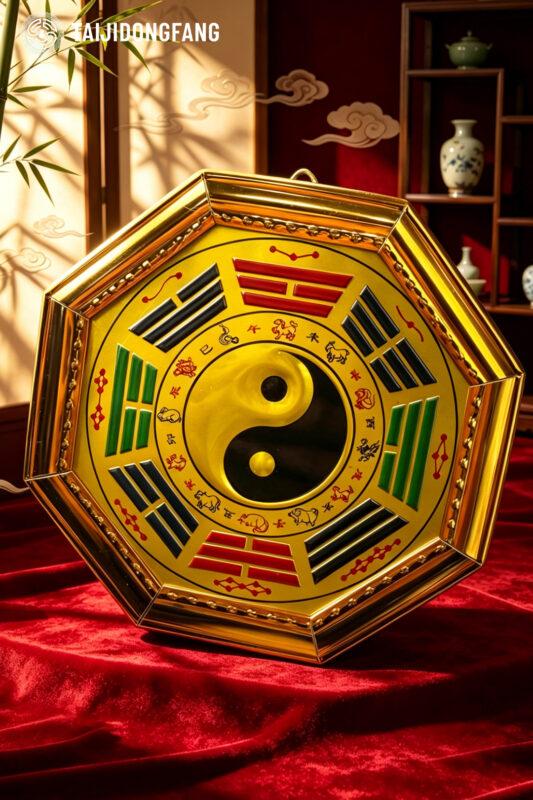
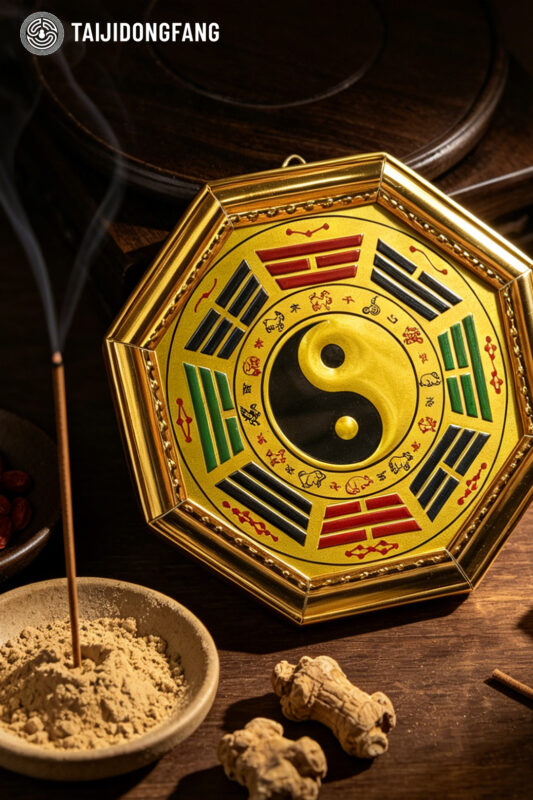
4. Bagua Mirror (八卦镜)
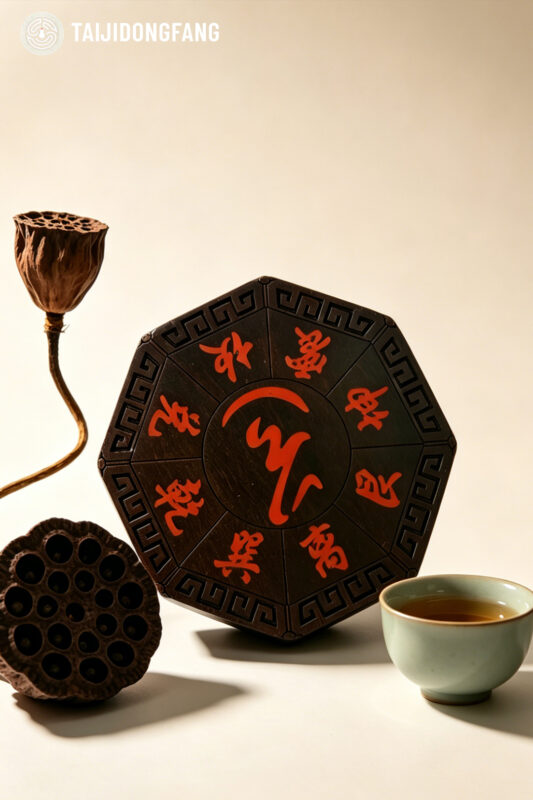
The Bagua mirror is one of the most powerful protective tools in Feng Shui. Its octagonal shape represents the eight trigrams of the I-Ching, each carrying specific energetic qualities.
What it does: Reflects, absorbs, or blocks negative energy (Sha Qi) coming from outside your home.
There are three types of Bagua mirrors:
Convex mirror – Reflects negative energy away. Use when facing sharp corners, lamp posts, cemeteries, hospitals, or any aggressive structure.
Concave mirror – Absorbs and collects energy. Use when facing a downward slope or staircase that drains your home’s luck.
Plane mirror – Blocks but does not reflect. Use when facing an ugly building shape or vertical road.
Where to place it:
Outside your main door – Facing outward, never inward
On an exterior wall – Facing the source of negative energy
Critical warnings:
Never place a Bagua mirror inside your home – It will reflect your own positive energy away.
Never point a Bagua mirror at your neighbor’s door – This is considered aggressive and may damage relationships.
Do not use a Bagua mirror unless there is a clear problem – If there is no Sha Qi, a mirror may reflect away good energy instead.
5. Five Emperor Coins (五帝钱)
The Five Emperor Coins represent the five most prosperous emperors of the Qing Dynasty: Shunzhi, Kangxi, Yongzheng, Qianlong, and Jiaqing. These coins are traditionally strung together in order and carry powerful energy of wealth, authority, and protection.
What it does: Attracts wealth, blocks negative energy, protects against Sha Qi, and brings stability to your finances.
Where to place it:
Under the doormat – To prevent wealth from leaving your home
On the inside of your front door – Hanging above the door frame
In your wallet or purse – For personal wealth attraction
In the wealth corner – The far left corner from the front door
On the back of your computer monitor – In an office to attract career success
Correct arrangement: The coins must be strung in the correct order – Shunzhi, Kangxi, Yongzheng, Qianlong, Jiaqing from left to right when hanging.
What to avoid:
Do not place in the bathroom, kitchen, or bedroom – these areas have energy that weakens the coins
Do not hang directly facing a mirror – mirrors reflect the coins’ energy away
Keep them clean and in good condition – rusted or damaged coins lose effectiveness
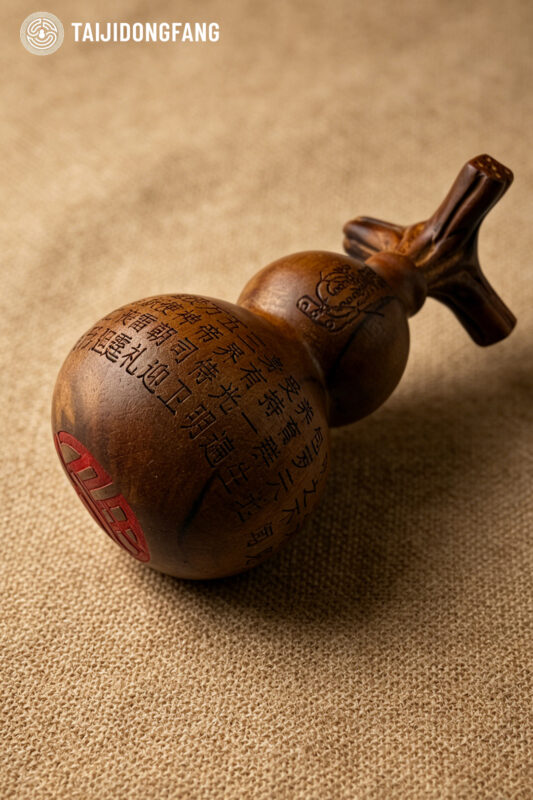
6. Wu Lou (Gourd / 葫芦)
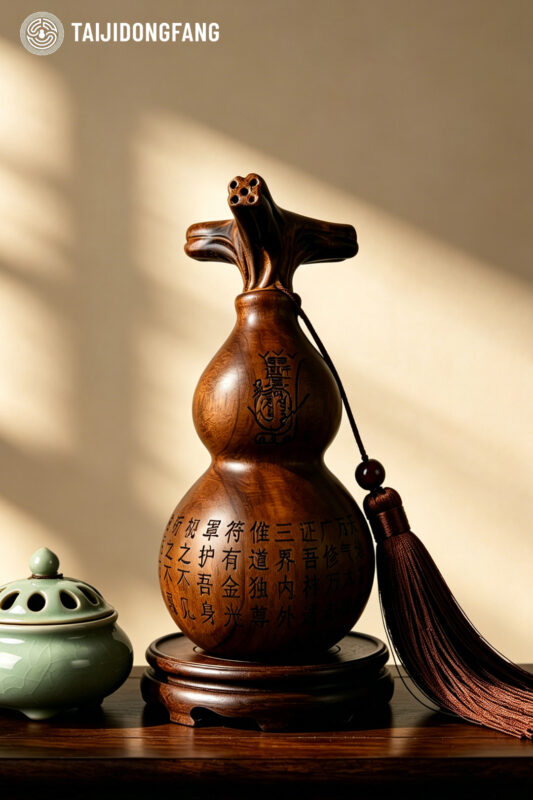
The Wu Lou, or bottle gourd, has been used in Chinese healing traditions for thousands of years. Its shape – a small top and round bottom – is said to absorb negative energy like a vacuum.
What it does: Absorbs illness energy, protects health, and is especially useful for those who are frequently sick or recovering.
Where to place it:
Beside the bed – On the nightstand of someone who is ill or has trouble sleeping
In the health area – The east sector of your home or room
Near the stove – The stove represents family health in Feng Shui
By the front door – To prevent illness energy from entering
Material options:
Brass Wu Lou – Strongest for absorbing illness
Natural dried gourd – Gentle and earthy
Jade Wu Lou – Combines health protection with jade’s protective qualities
Special note: For serious or chronic illness, place a brass Wu Lou beside the bed and another in the east sector of the home. Empty the gourd energetically by tapping it gently once a month.
7. Fu Dogs (石狮子 / Guardian Lions)
Fu Dogs, also known as Chinese guardian lions, are traditionally placed in pairs to protect homes, temples, and businesses. One is male (right paw on a ball, representing protection of the home), and one is female (left paw on a cub, representing protection of those inside).
What it does: Guards your home from negative influences, evil spirits, and harmful intentions. They are the ultimate protectors.
Where to place it:
Outside the front door – One on each side of the entrance
In a home office – Facing the door to protect your career from office politics
In a shop or restaurant – Near the entrance to welcome good customers and block difficult ones
Important rules:
Always use a pair – never just one
Male on the right (when facing out), female on the left
Position them so they face away from your home – toward the outside world they are guarding against
For apartments, place them inside near the door, facing outward
Understanding the Bagua Map – Your Energy Blueprint
The Bagua (八卦) is an octagonal map used in Feng Shui to identify which areas of your home correspond to which aspects of your life. When you overlay the Bagua over your floor plan, you can see exactly where to place specific decorations.
The eight Bagua areas are:
| Direction | Area | Best decoration |
|---|---|---|
| South | Fame & Reputation | Fire element, red colors, phoenix symbol |
| Southwest | Love & Relationships | Earth element, paired items, pink crystals |
| West | Creativity & Children | Metal element, white/gold, children’s artwork |
| Northwest | Helpful People & Travel | Metal element, gray/white, images of mentors |
| North | Career & Path in Life | Water element, black/dark blue, flowing shapes |
| Northeast | Knowledge & Self-Cultivation | Earth element, books, quiet study objects |
| East | Health & Family | Wood element, green, family photos, Wu Lou |
| Southeast | Wealth & Abundance | Wood element, purple/green, Pi Xiu, coins |
How to use the Bagua with your TAIJIDONGFANG decorations:
Stand at your front door facing into your home.
Draw a simple map of your home.
Divide the map into nine equal sections (eight Bagua areas plus the center).
Place your TAIJIDONGFANG decorations in the areas that match your goals.
For example, if you want to improve your career, place a Water-element piece in the north area. If you want to attract wealth, place a Pi Xiu or Five Emperor Coins in the southeast area.
Five Essential Principles for Placing Decorations
Principle 1: Keep Pathways Clear
Qi flows like water – it needs open, unobstructed paths. Do not place large decorations in the middle of walkways or in front of doors. Your furniture should allow smooth movement throughout the room.
Principle 2: Balance Height and Weight
Large, heavy pieces belong on the floor or low furniture. Light, small pieces can go on high shelves. Too many heavy pieces on high shelves creates oppressive energy. Too many light pieces on the floor feels disconnected.
Principle 3: Use the Command Position
The “command position” is the spot in a room that allows you to see the door without being directly in line with it. Place important decorations – like a Pi Xiu for wealth or a Fu Dog pair for protection – in the command position of each room for maximum effect.
Principle 4: Respect the Elements
Avoid placing conflicting elements next to each other. For example, Fire (red, candles, triangles) should not be directly next to Water (black, blue, flowing shapes), as Water extinguishes Fire. Wood should not be directly next to Metal, as Metal cuts Wood.
Principle 5: Less Is More
You do not need to fill your home with decorations. One carefully chosen, properly placed piece is far more powerful than ten random items scattered around. Start with one or two pieces and observe how your space feels.
How to Cleanse and Activate Your TAIJIDONGFANG Decorations
A new decoration may carry stagnant energy from the factory, warehouse, or shipping process. Before using any piece, it must be cleansed and activated.
Cleansing methods:
| Method | How to do it | Best for |
|---|---|---|
| Smoke cleansing | Pass the piece through incense smoke (sandalwood or white sage) | All types, especially metal and wood |
| Moonlight bath | Place the piece under the full moon overnight | Jade, crystal, and gentle materials |
| Salt water | Soak for 2-4 hours in water with sea salt, then rinse (do not use on jade) | Metal and stone pieces |
Simple activation ritual:
Find a quiet place where you will not be disturbed.
Hold the piece in both hands.
Close your eyes and take three deep breaths.
State your intention out loud. For example: “This Pi Xiu is now activated to attract stable wealth and protect my income. I use it with respect and gratitude.”
Gently blow on the piece three times – this transfers your personal Qi into it.
Place it immediately in its designated position.
Maintenance:
Dust your decorations gently once a month
Recharge them under moonlight or with incense every 3–6 months
If a piece cracks or breaks significantly, thank it and retire it respectfully (bury it in clean soil or wrap it in red cloth before disposal)
Common Mistakes to Avoid
| Mistake | Why it is a problem |
|---|---|
| Placing too many pieces | Conflicting energies cancel each other out |
| Putting decorations on the floor | Disrespects the piece and weakens its energy |
| Using broken or dusty items | Stagnant energy accumulates and spreads |
| Forgetting to cleanse before use | Old energy interferes with your intention |
| Placing protective items facing inward | Bagua mirrors and Fu Dogs should face outward |
| Ignoring your intuition | If a piece feels wrong in a certain spot, move it |
A Note on Authenticity and Respect
Feng Shui is not a trend or a quick fix. It is a profound system of understanding the relationship between humans and their environment, developed over thousands of years in China. At TAIJIDONGFANG, we honor this tradition by creating pieces that respect the original symbolism, materials, and intentions.
When you use these decorations, take a moment to appreciate the culture and wisdom behind them. Learn the meaning of each symbol. Treat your pieces with care. This respect is not just polite – it is essential for the energy to work as intended.
Final Checklist for Using TAIJIDONGFANG Decorations
Before you place any TAIJIDONGFANG decoration in your home, run through this list:
✅ I have identified my goal (wealth, health, protection, harmony, or clarity).
✅ I have chosen the correct type of decoration for that goal.
✅ I have considered the Bagua area that corresponds to my goal.
✅ I have checked the Five Elements – does this piece complement my space?
✅ I have cleansed the piece before first use.
✅ I have activated it with clear intention.
✅ I have placed it in the proper location (not the bathroom, not on the floor).
✅ I will clean and recharge it every few months.